At The Incomplete Separation, we champion a world where democracy empowers all religious communities. Our vision promotes a multi-religion election system, ensuring every faith has a voice in governance. By transitioning from traditional church elections to inclusive, multi-faith elections, we advocate for the establishment of the Faith Representatives Chamber (FRC), a body free from political influence, representing all beliefs. Join us in creating a future where democracy and faith coexist harmoniously, fostering respect and understanding across diverse communities.
The Multi-Religion Election Guide serves as an essential resource for understanding how to implement a multi-religion election system in various countries. This comprehensive guide outlines the principles behind establishing a democratic process that accommodates all faiths, ensuring that every religious community has a voice. It provides step-by-step instructions, real-world examples, and best practices for transitioning from traditional church elections to a more inclusive system. Ideal for policymakers, religious leaders, and advocates for democracy, this guide empowers users to promote equality and representation in governance.
The Faith Representatives Chamber Model is a detailed blueprint for establishing a governing body that represents all faiths, free from political party influence. This model outlines the structure, roles, and responsibilities of the Faith Representatives Chamber (FRC), emphasizing its importance as a democratic institution. It includes insights on electoral processes, member selection, and operational guidelines to ensure fair representation. This product is perfect for religious organizations and civic leaders looking to advocate for a multi-faith approach to governance, paving the way for a more inclusive society.
The Multi-Religion Support Financial Model provides a robust framework for funding and sustaining multi-religion initiatives without reliance on traditional tax revenues. This model outlines various funding mechanisms, including public-private partnerships, grants, and community contributions, designed to support the operational needs of faith-based organizations. It emphasizes sustainable practices that ensure equitable financial support for diverse religious communities, fostering a collaborative environment. Ideal for financial planners, religious leaders, and nonprofit organizations, this model provides the tools necessary to secure and allocate resources effectively.
What is the Multi-Religion Election System (MRES)?
The Multi-Religion Election System is a Swedish term (Multireligionvalsystem) for the English Multi-Religion Election System (MRES). It is a reform based on research on the religious election, the Church Election, which is applied only in the Nordic countries such as Sweden, Norway, Denmark and Finland. Hereinafter referred to as the Church Election Reform.
Through research and analysis of the Church Election, we found both advantages and disadvantages; however, the disadvantages outweigh the advantages.
The Positive Aspects of the Church Election
That only the Christian Protestant denominations have introduced democracy into their denominations through the church election, i.e. they have democratized their denominations.
The church election has made it possible for a woman to become an archbishop.
That only natives or those who have converted to Protestantism and have reached the age of 16 are allowed to practice democracy two years before the general election or the election to the European Parliament.
The Negative Aspects of the Church Election
The church election is not applied among other faith communities such as Jews, Muslims, Buddhists, Hindus and others who are not Protestant. Nor is it applied among Christian Catholics and Orthodox who are Swedish citizens, even though these faith communities include people who have fled their countries and come as refugees to the Nordic countries and who oppose the introduction of democracy in their faith communities that the Nordic churches have introduced.
These non-Protestant religious communities deprive their young members who have reached the age of 16 and attend the same high school as the 16-year-old Protestant students of the right to practice democracy two years before the general election or the election to the European Parliament.
These denominations that are not Protestant also deprive their female members of the ability to become priests like those governed by the Pope.
Those religious communities that have not introduced democracy into their religious communities, including the Protestant ones in the Nordic countries that have introduced democracy into their religious communities, have made it more difficult to separate the state from the church and religion from politics.
The church election leads to exclusionary politics, when the parliamentary parties participate in the church election in which only native Protestants who have reached the age of 16 and who are members of the parliamentary parties' youth and student unions are allowed to participate and vote, while others end up outside, i.e. are not allowed to follow their party's lines.
The negative consequence of the church election is that in the Swedish parliament there is a religious Christian party, KD, corresponding to the religious parties that are in the EU parliament and that make laws.
Only a few countries within the EU, such as Sweden, Denmark and Finland, apply democracy in their religious communities, while other EU countries lack corresponding elections.
These religious Christian parties provide great support to Israel, which prevents peace and in principle even a two-state solution. Accusations of anti-Semitism and Islamophobia are increasing both in schools, religious education and even outside these areas.
That a Syrian Orthodox woman abandoned her faith and converted to Protestantism in order to be accepted as a priest. The question is should all women convert or remain in their faiths and work to introduce democracy in these faiths.
The Goal of the Multi-Religion Election System (MRES) .Top conflict resolution model
The goal of the Multi-Religion Election System (MRES) is to introduce democracy in all religious communities without exception, starting with the Nordic countries that already have church elections within the EU and eventually in other countries, the USA, Israel, Iran, India, China, Great Britain, Germany, Brazil and France, etc. To achieve a complete separation between state and church and between religion and politics.
We start from the principle that it is democracy that has given all religious communities freedom of religion, and that democracy be introduced in all religions, without exception. A transition from church elections to a multi-religion election system in those countries that already have church elections. In other countries (USA, UK, China, India, Iran, Israel.....) that do not have similar elections, a multi-religion election system is introduced.
Core Values and Principles
Despite major differences between the Church Election and the Multi-Religion Election, they still have the same basic value: to introduce democracy into their religious communities and that those who have reached the age of 16 have the right to vote. This means that democracy is introduced into all religious communities, without exception.
Modernization: A modernization of religious influence in Nordic democracy and religious neutrality.
Democratic Framework: To replace the current church elections in the Nordic countries with a system that includes all faith communities on equal terms.
Equal Representation: To create a more equal religious representation in a secular and multicultural society.
Religious Neutrality: That the state should not treat any individual community differently, but give all religions the same democratic platform.
Voices for change
Empowering faith in democracy
The introduction of a multi-religion election system is a groundbreaking step towards inclusivity and representation. It allows all faiths to have a voice in governance, promoting true democracy.
The Faith Representatives Chamber is a revolutionary concept that eliminates political bias. It empowers all faith communities to collaborate on governance and social issues.
Transitioning to a multi-religion election system will ensure that every belief is acknowledged and respected within the political framework. This is vital for fostering peace and understanding.
Get in touch
We'd love to hear from you.
Sorry, we were not able to submit the form. Please review the errors and try again.
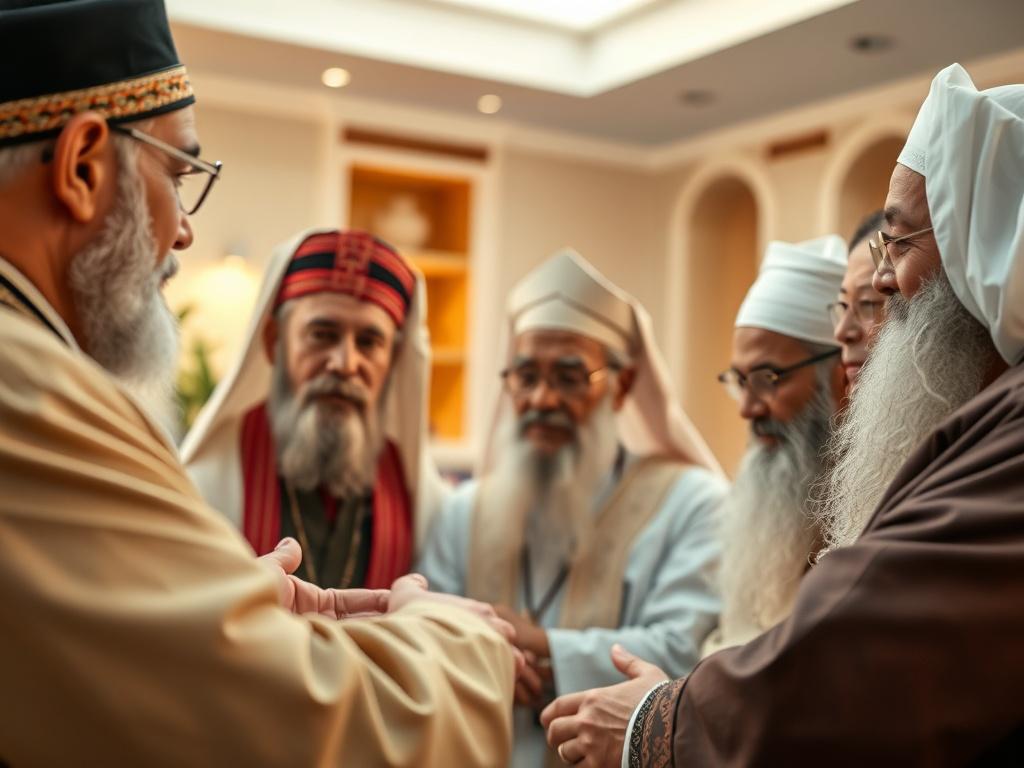 Multi-religion election system implementation
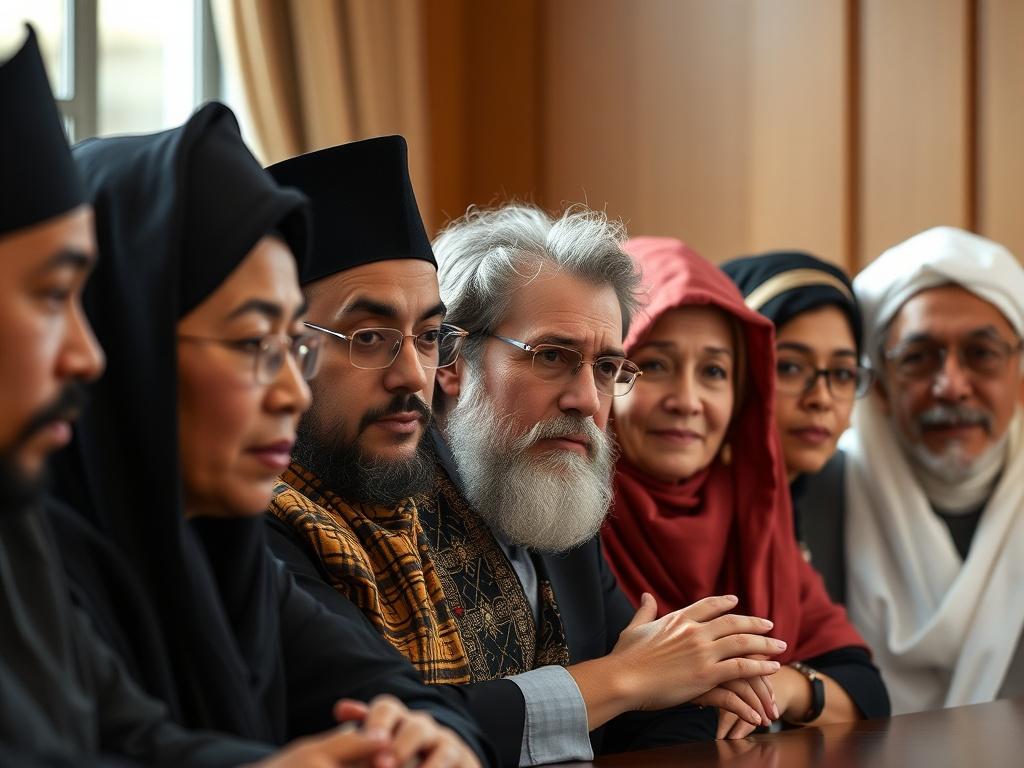 Faith representatives chamber coordination
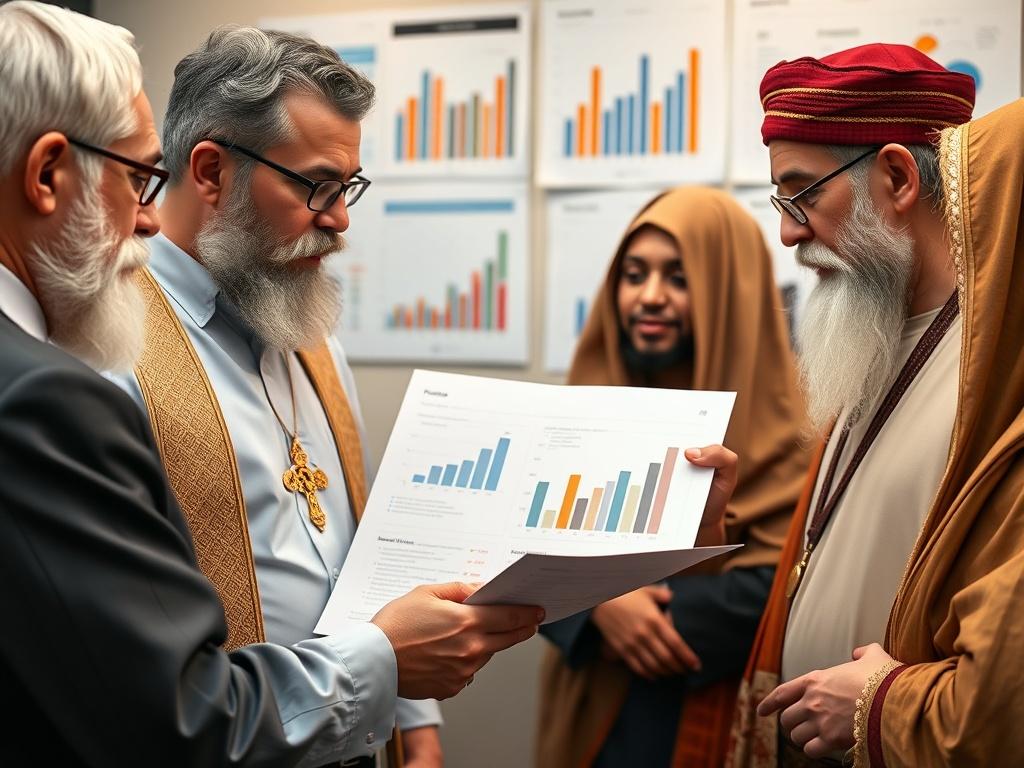 Multi-religion support financial model